

Ipsa Tripathy
Bhubaneswar: Whenever we hear the word “wildlife,” the first images that come to mind are often tigers, elephants, lions, or leopards. They appear in documentaries, conservation campaigns, tourism advertisements, and newspaper headlines. Their protection is rightly celebrated because they are among the most iconic animals on Earth.
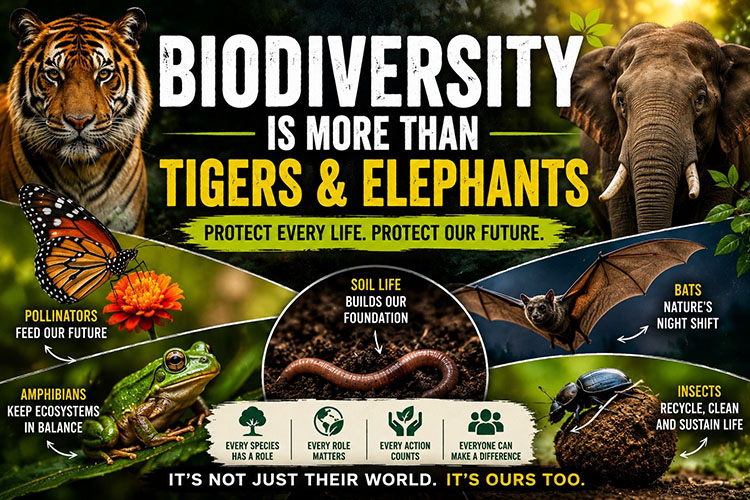
But there is another side to biodiversity that rarely receives the same attention. It is the world of frogs calling after the first rain, bees moving quietly from flower to flower, earthworms turning the soil beneath our feet, bats flying silently at dusk, butterflies visiting gardens, and even tiny insects that most people hardly notice. These creatures may never become the face of wildlife conservation, yet every single day, they perform tasks that keep nature functioning. Without them, forests would struggle to regenerate, crops would produce lower yields, soil would lose its fertility, and entire ecosystems would slowly begin to collapse.
Perhaps it is time we realised that biodiversity is far more than protecting a few famous animals. It is about safeguarding every living organism that helps maintain the balance of life.
The Workers We Rarely Notice
Nature functions like a well-organised community where every species has a role. Some animals hunt, some pollinate flowers, some recycle dead matter, while others disperse seeds across forests. Take bees, for example. They are among the world’s most important pollinators. By carrying pollen from one flower to another, they help plants produce fruits, vegetables, seeds, and nuts. Scientists estimate that a large share of flowering plants and many food crops depend, at least in part, on animal pollination. Butterflies, moths, birds, and even bats also contribute to this process. Without these pollinators, food production would become increasingly difficult. Yet very few people think of them as wildlife worth protecting.
The Engineers Beneath the Soil
If there is one group of animals that deserves far more appreciation, it is the organisms living beneath the ground. Earthworms, ants, termites, beetles, fungi, and countless microscopic organisms constantly work to improve soil health. Earthworms loosen the soil, allowing water and air to reach plant roots. Microorganisms break down dead leaves and organic matter, returning valuable nutrients to the earth. Ants and termites help recycle plant material while creating underground tunnels that improve soil structure. Healthy agriculture depends not only on rain and fertilisers but also on these invisible workers. Without them, the land itself would gradually lose its ability to support life.
Nature’s Clean-Up Team
Imagine a forest where dead leaves, fallen trees, and animal remains never decomposed. Within a short time, the forest floor would be buried under waste. Fortunately, nature has its own cleaning system. Fungi, bacteria, insects, beetles, and scavengers break down dead organic material, returning nutrients to the ecosystem. This natural recycling process keeps forests healthy and supports new plant growth. It is one of the most important ecological services on Earth, yet it happens quietly, without attracting attention.
Small Animals, Big Responsibilities
Amphibians such as frogs are another overlooked group. They feed on mosquitoes and other insects, naturally helping control pest populations. Their presence also indicates the health of freshwater ecosystems because frogs are highly sensitive to pollution and environmental changes. Birds contribute by dispersing seeds across forests and controlling insect populations. Bats pollinate flowers and consume enormous numbers of insects every night, helping reduce agricultural pests. Even spiders, often feared by people, play an important role by keeping insect populations under control. Every species, regardless of its size, performs a function that supports the larger ecosystem. When one group disappears, the effects often spread far beyond what we can immediately see.
Why Are They Being Ignored?
One reason is visibility.
Large mammals naturally attract more attention than insects or soil organisms. A tiger crossing a forest road becomes national news. The disappearance of a native bee species often goes unnoticed. Funding, awareness campaigns, and conservation efforts also tend to focus on charismatic wildlife because these animals inspire public interest.
While protecting flagship species is important, conservation cannot succeed if smaller but equally essential species are forgotten. Protecting biodiversity means protecting ecosystems, not just individual animals.
The Threats They Face
Today, many lesser-known species face growing pressure from human activities. Rapid urbanisation, deforestation, excessive use of pesticides, pollution, wetland destruction, and climate change are reducing habitats and food sources. Artificial lighting affects nocturnal insects.
Chemical pesticides harm bees and butterflies. Polluted rivers threaten frogs and freshwater organisms. Even the removal of old trees can destroy nesting sites for birds, bats, and insects. The loss of these species may not be immediately visible, but over time it weakens the natural systems that support forests, agriculture, and human life.
What Can We Do?
Protecting biodiversity is not only the responsibility of governments and scientists. Every citizen has a role. Planting native trees and flowering plants can provide food for pollinators. Reducing the use of harmful pesticides helps protect insects, birds, and amphibians. Keeping ponds, wetlands, and local green spaces free from pollution supports countless species that depend on these habitats.
Simple actions such as avoiding unnecessary destruction of insect nests, respecting wildlife, and supporting habitat conservation can make a meaningful difference. Governments, meanwhile, should continue protecting forests while also conserving wetlands, grasslands, rivers, and other ecosystems that receive less public attention. Environmental education should encourage people to value all forms of life, not only the most famous ones.
Every Species Matters
A healthy forest is not built by tigers alone. A thriving ecosystem is created by millions of living organisms working together every day. The bee that pollinates a flower. The frog that controls insects. The earthworm that enriches the soil.
The bat that spreads seeds. The fungus that recycles nutrients. They may never appear on posters or become symbols of conservation, but without them, the natural world would slowly begin to fall apart. As we celebrate wildlife, perhaps it is time to widen our understanding of what biodiversity truly means. Because protecting nature is not only about saving the animals we admire.
It is about safeguarding the countless living creatures we often overlook, the silent workers whose efforts keep our forests green, our farms productive, and our planet alive.
