

Ipsa Tripathy
Bhubaneswar: Turn on a tap in your home, draw water from a borewell, or pump water from a village tube well, and it is easy to believe that clean water will always be there. For millions of people, groundwater is a silent lifeline. It flows beneath our feet, hidden from sight, supplying drinking water to homes, irrigating farms, supporting industries, and helping communities survive through dry seasons. Unlike rivers and lakes, groundwater does not attract much attention because it is invisible. We rarely think about it until wells begin to dry up or the water becomes unsafe to drink.
Today, however, a more worrying question is emerging. Is our groundwater slowly becoming poisoned?
The concern may sound alarming, but scientists and environmental experts across the world have been warning about groundwater pollution for years. Unlike polluted rivers, contaminated groundwater often remains unnoticed for a long time. By the time the problem is discovered, it may already have affected thousands of people.
Groundwater is rainwater that slowly seeps through layers of soil and rock, collecting beneath the Earth’s surface in natural underground reservoirs known as aquifers. It is one of nature’s greatest gifts. During summers, when ponds dry up and rivers shrink, groundwater continues to provide water for drinking and farming. In many parts of India, including Odisha, villages and towns depend heavily on borewells and tube wells for their daily water needs.
But groundwater is not an unlimited or indestructible resource. Just as it takes years for rainwater to recharge underground reserves, it can also take years to remove pollutants once they enter these aquifers. That is why groundwater pollution is often described as a “hidden crisis.”
How Is Groundwater Becoming Polluted?
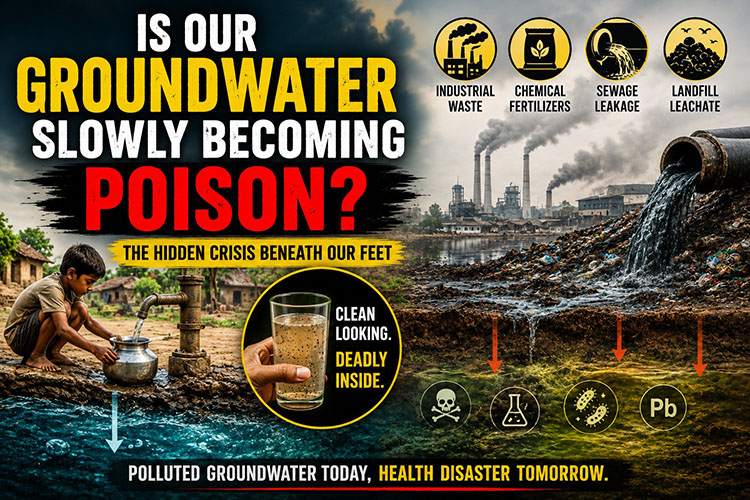
Unlike rivers, groundwater is protected by layers of soil. Many people assume this makes it safe from pollution. Unfortunately, that is not always true. Pollutants from the surface can slowly seep through the soil and reach underground water. One major source is the excessive use of chemical fertilisers and pesticides in agriculture. During rainfall or irrigation, some of these chemicals move through the soil and eventually reach groundwater.
Industrial waste is another concern. If factories do not properly treat their wastewater or dispose of hazardous waste responsibly, harmful substances can enter nearby soil and gradually contaminate underground water sources. Poorly managed landfills also pose a serious threat. Rainwater passing through piles of garbage creates a polluted liquid known as leachate. If landfill sites are not properly designed, this contaminated liquid can seep into the ground.
Even household sewage can become a problem. Leaking septic tanks and untreated wastewater may introduce bacteria, viruses, and harmful chemicals into groundwater. The danger is that this pollution happens slowly and silently. People may continue using contaminated water for years without realising the risk.
Impact on Human Health
Unlike dirty river water, polluted groundwater often looks clean. It may have no unusual colour, smell, or taste. But appearances can be misleading. Contaminated groundwater may contain harmful bacteria, nitrates, heavy metals such as arsenic or lead, or industrial chemicals that can affect human health. Long-term exposure to polluted groundwater has been linked to digestive illnesses, kidney problems, neurological disorders, and other serious health conditions, depending on the type and level of contamination.
Children, pregnant women, and elderly people are particularly vulnerable because their bodies are more sensitive to pollutants. This is what makes groundwater pollution especially dangerous. The threat is often invisible.
More Than a Human Problem
Groundwater is not only important for people. It also supports rivers, wetlands, forests, and agriculture. Many rivers continue flowing during dry seasons because groundwater slowly feeds them from below. Wetlands depend on healthy groundwater levels to sustain birds, fish, amphibians, and countless other species. When groundwater becomes polluted, these ecosystems can also suffer. Farmers who depend on groundwater for irrigation may unknowingly use contaminated water on their crops. Wetlands receiving polluted groundwater may experience declining biodiversity. What begins beneath the ground eventually affects the entire environment.
Can We Prevent This Crisis?
The encouraging news is that groundwater pollution is largely preventable. Reducing the excessive use of chemical fertilisers and pesticides can significantly lower the amount of pollutants entering the soil. Promoting organic farming and precision agriculture can help maintain productivity while reducing environmental risks. Industries must follow strict waste treatment standards before releasing wastewater. Landfills need proper lining systems to prevent contaminated leachate from reaching underground aquifers. Governments also have an important responsibility. Regular groundwater quality monitoring, stronger enforcement of pollution control laws, improved sewage treatment, and protection of groundwater recharge zones should become key priorities.
At the community level, rainwater harvesting, protecting village ponds, maintaining green spaces, and avoiding indiscriminate waste dumping all contribute to healthier groundwater.
Groundwater has always worked quietly in the background. It asks for little. It simply stores the rain, sustains crops, supports ecosystems, and provides water when rivers cannot. Yet our actions on the surface are slowly determining its future. If pollution continues unchecked, the water that has sustained generations could become increasingly unsafe for those who depend on it tomorrow.
Protecting groundwater is not only about ensuring enough water for the future. It is about ensuring that the water we leave behind is safe, clean, and capable of sustaining life. Because once an underground aquifer becomes polluted, cleaning it is far more difficult than preventing the pollution in the first place. The greatest environmental crisis is often not the one we can see. Sometimes, it is flowing silently beneath our feet.
