

Megha Pattnaik
Not long ago, the idea of escaping to a smaller city carried with it a quiet promise, cooler air, shaded streets, and a gentler pace of life. In Odisha, cities like Bhubaneswar, Cuttack, and even towns such as Titilagarh once offered that relief from the intensity of larger urban centres. Today, however, that distinction is fading. These cities are warming, not only because of global climate change, but because of the way they are being built. The rise of urban heat islands, once associated primarily with sprawling metros, is now reshaping the environmental reality of smaller cities, turning them into pockets of trapped heat and diminishing comfort.
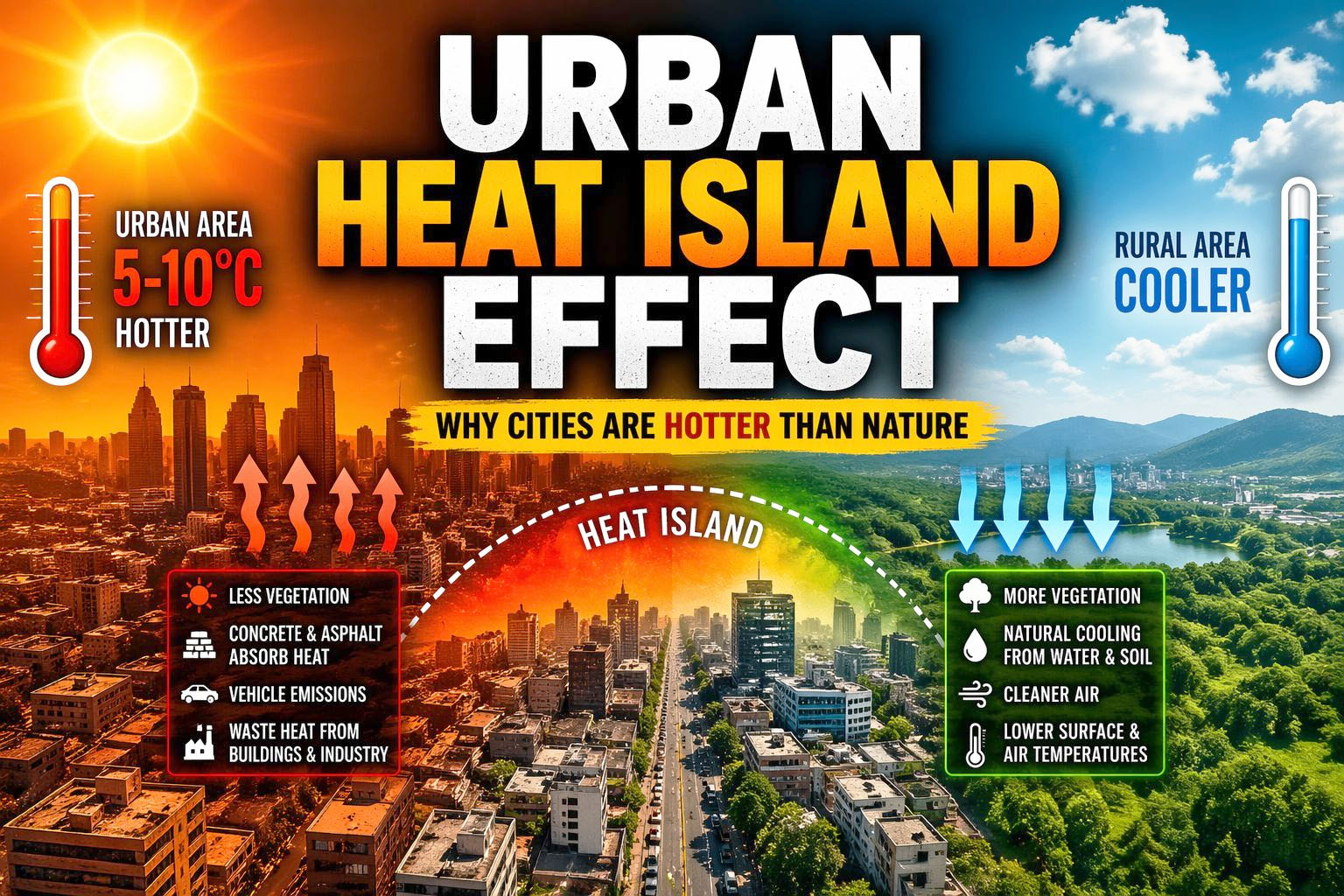
At its core, the urban heat island effect is a simple yet deeply consequential phenomenon. As natural landscapes give way to concrete, asphalt, and glass, cities begin to absorb and retain more heat. During the day, these surfaces soak in solar radiation, and by night, they release it slowly, preventing temperatures from dropping. The result is not just hotter days, but persistently warm nights that offer little respite. In Odisha, this shift is becoming increasingly visible. Bhubaneswar has recorded soaring daytime temperatures coupled with unusually warm nights, while places like Titilagarh are frequently identified among the hottest locations in the region. What is unfolding is not merely a seasonal discomfort, but the creation of a new, human-made microclimate.
The drivers behind this transformation are both visible and overlooked. Rapid urban expansion has led to a steady replacement of green cover with built-up spaces. Trees that once provided shade and facilitated natural cooling through evapotranspiration are being cleared to make way for roads, buildings, and infrastructure. At the same time, water bodies, ponds, wetlands, and lakes that historically acted as thermal regulators, are shrinking or disappearing altogether due to encroachment and neglect. Urban growth in many of these cities has been swift, but not always thoughtful. Planning often prioritises immediate development needs over long-term climate sensitivity, resulting in dense layouts that restrict airflow and amplify heat retention. Modern construction materials further intensify the problem, as they trap heat far more efficiently than natural surfaces ever did.
The consequences of this shift extend far beyond rising temperatures. Heat islands are, at their core, a public health concern. Prolonged exposure to high temperatures increases the risk of heat stress, dehydration, and heat-related illnesses, particularly for outdoor workers, street vendors, and economically vulnerable populations. The burden is unevenly distributed; while some can retreat into air-conditioned spaces, others remain exposed to harsh conditions with little relief. Increased reliance on cooling devices also drives up electricity consumption, placing pressure on energy systems and contributing to higher emissions, thereby reinforcing the very cycle that intensifies the heat. Water resources, too, come under strain, as higher temperatures accelerate evaporation and deepen existing challenges of groundwater depletion.
Perhaps one of the most overlooked aspects of this phenomenon is the loss of night-time cooling. When cities fail to cool down after sunset, the human body is denied the opportunity to recover from daytime heat exposure. This leads to cumulative stress, affecting sleep, productivity, and overall well-being. Over time, such conditions can transform cities into spaces that are not only physically warmer, but also more exhausting and less liveable.
Yet, this trajectory is not irreversible. The same cities that are currently amplifying heat have the potential to mitigate it, if growth is approached with greater ecological awareness. Reintroducing and protecting urban green cover is one of the most effective steps forward. Tree-lined streets, community green spaces, and urban forests can significantly lower temperatures while improving air quality. Equally important is the restoration and preservation of water bodies, which serve as natural cooling systems within the urban fabric. Architecture, too, must evolve to respond to climate realities. Incorporating cool roofs, reflective materials, and traditional design elements that promote ventilation can reduce heat absorption at the building level.
Odisha’s smaller cities stand at a critical juncture. They are growing, evolving, and redefining their identities. In doing so, they face a choice, whether to replicate the mistakes of overheated metropolitan regions or to pioneer a more balanced model of urbanisation that respects both development and ecology. The challenge is not growth itself, but the manner in which it unfolds. A city that loses its trees, its water, and its ability to cool itself does not merely become hotter; it becomes harsher, more unequal, and increasingly difficult to inhabit.
In the end, the story of heat islands in these cities is not just about temperature. It is about memory and foresight, about whether urban spaces can grow without forgetting the natural systems that once sustained them. Because a city that cannot breathe will, inevitably, begin to burn.
