

Ipsa Tripathy
Bhubaneswar: For the people of Odisha, the arrival of the monsoon is both a blessing and a challenge. Rain fills reservoirs, nourishes crops and replenishes rivers that sustain millions of livelihoods. But when rainfall becomes excessive, the same rivers that support life can overflow, inundating villages, damaging infrastructure and disrupting everyday life.
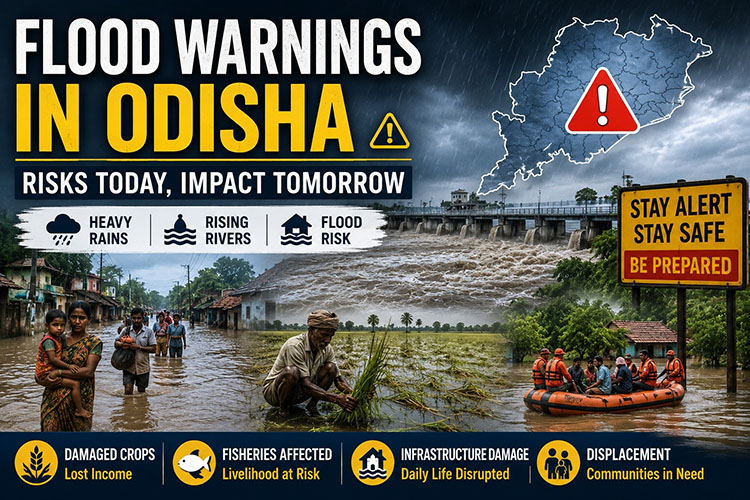
Over the past few days, Odisha has witnessed intense rainfall under the influence of a deep depression over the northwest Bay of Bengal. The India Meteorological Department (IMD) has issued warnings of heavy to extremely heavy rainfall, prompting authorities to remain on high alert as rivers swell and low-lying areas face an increasing risk of flooding. Flood warnings are more than weather advisories. They are an opportunity to prepare, reduce losses and protect communities before water reaches dangerous levels.
Why Flood Warnings Matter
Floods rarely occur without warning. Meteorologists continuously monitor rainfall, river catchments, satellite imagery, weather radar and water levels in major rivers. When prolonged heavy rainfall is expected or rivers begin approaching danger levels, alerts are issued so that district administrations, emergency services and residents can act in advance.
In Odisha, these warnings become especially important because many rivers, including the Subarnarekha, Baitarani, Brahmani and Mahanadi, respond quickly to heavy rainfall over their upstream catchments. Even rainfall occurring hundreds of kilometres away can eventually raise river levels downstream, making continuous monitoring essential.
The current spell of heavy rainfall has been driven by a deep depression that crossed the Odisha–West Bengal coast. The IMD has warned of widespread heavy rainfall, thunderstorms and the possibility of flooding in vulnerable districts. Authorities have also heightened preparedness measures, while schools in some districts were temporarily closed as a precaution.
The IMD’s district and subdivision warnings continue to indicate heavy rainfall over parts of Odisha, suggesting that waterlogging and localized flooding may persist where soils are already saturated.
When Floodwaters Rise, Livelihoods Are the First Casualty
Floods affect far more than roads and buildings. For thousands of farming families, standing crops can remain submerged for days, reducing yields or destroying an entire season’s income. Paddy fields, vegetable farms and horticultural crops are particularly vulnerable to prolonged inundation.
Fishermen also face significant losses. Rough sea conditions and swollen rivers often force fishing activities to stop, leaving daily wage earners without income until conditions improve. The IMD has advised fishermen to avoid venturing into the sea during the current weather system.
Small shop owners, street vendors and transport operators are similarly affected. Flooded roads interrupt supply chains, delay deliveries and reduce customer access, creating economic losses that continue even after floodwaters recede. For daily wage workers, even a few days without work can create financial hardship.
The Hidden Costs After the Flood
The impact of flooding does not end when the water drains away. Floodwater often contaminates drinking water sources, increasing the risk of water-borne diseases if adequate sanitation is not restored quickly. Damaged roads and bridges slow transportation, while schools and public services may remain disrupted until infrastructure is repaired.
Livestock losses, damaged irrigation systems and soil erosion can also affect agricultural productivity well beyond the current monsoon season. Recovery therefore requires not only emergency relief but also long-term rehabilitation.
What Could Happen in the Coming Days?
Current forecasts indicate that heavy rainfall may continue over parts of Odisha as active monsoon conditions persist, meaning already saturated catchments could experience additional runoff. Where rivers are flowing high or drainage systems are under pressure, localized flooding and waterlogging remain possible. The greatest concern is often not a single day of heavy rain, but successive days of rainfall. Continuous precipitation reduces the land’s ability to absorb water, allowing more runoff to enter rivers and increasing flood risk.
Low-lying villages, areas near riverbanks and locations with poor drainage remain particularly vulnerable if rainfall continues. The exact severity will depend on future rainfall amounts, river discharge and upstream conditions, all of which are being monitored continuously by meteorological and water resource agencies.
Preparedness Saves Lives
Flood warnings are effective only when they lead to timely action. Residents living in vulnerable areas are encouraged to stay informed through official advisories, avoid crossing flooded roads, protect important documents and move livestock and essential belongings to safer locations when instructed by local authorities.
For farmers, early warnings can help safeguard machinery, harvested crops and livestock. For local administrations, they provide valuable time to position rescue teams, prepare shelters and coordinate emergency response. Every hour of advance warning can make a significant difference.
Living with Floods in a Changing Climate
Scientists have observed that a warmer atmosphere can hold more moisture, increasing the likelihood of intense rainfall events. While no individual flood can be attributed solely to climate change, extreme rainfall is becoming an increasingly important challenge for disaster management and water planning. This makes early warning systems, resilient infrastructure and community preparedness more important than ever.
Floods may remain a recurring part of Odisha’s monsoon season, but timely forecasts, informed communities and coordinated action can significantly reduce their human and economic impact. Ultimately, flood warnings are not merely forecasts of rising water, they are opportunities to protect lives, preserve livelihoods and strengthen resilience before disaster strikes.
