

Ipsa Tripathy
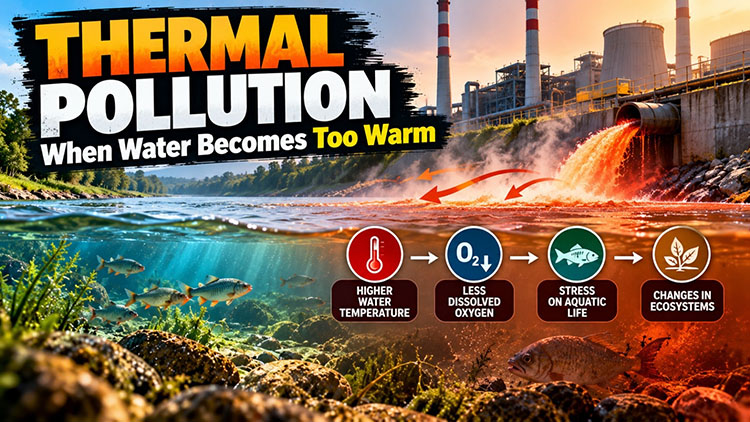
Bhubaneswar: Water pollution is often associated with sewage, plastics, chemicals and industrial waste. However, water can also be polluted by heat. When human activities raise the temperature of a river, lake or other water body beyond its natural range, the change can disrupt aquatic ecosystems. This is known as thermal pollution, an often overlooked form of environmental pollution that can affect water quality even when no visible waste is present.
One major source is the use of water for cooling in thermal power plants and other industrial facilities. Many industrial processes generate heat that must be removed to keep equipment operating safely. Water may be drawn from a river, lake or coastal area, used to absorb excess heat, and then returned at a higher temperature. Other sources include heated wastewater from industrial operations, the removal of trees along riverbanks and urban runoff flowing over hot roads and paved surfaces. Dams and changes in river flow can also alter natural water temperatures.
The effects begin with the physical properties of water. Warm water holds less dissolved oxygen than cold water at the same atmospheric pressure. Dissolved oxygen is essential for fish, aquatic insects and many other organisms that rely on it for respiration. When water temperatures rise, oxygen availability can decline just as the metabolic demands of many aquatic organisms increase. This combination can place additional stress on aquatic life, particularly during hot weather or when water flow is low.
Temperature also influences the biology of aquatic species. Fish, aquatic insects, plankton and other organisms have different temperature ranges within which they can grow, feed and reproduce effectively. When water becomes too warm, sensitive species may experience physiological stress, reduced reproductive success or changes in behaviour. Some may move towards cooler areas if suitable habitat is available. Others, particularly species unable to escape or tolerate the change, may decline. A rapid temperature shift can be harmful even when the new temperature would be tolerable under more gradual conditions.
The consequences can extend beyond individual organisms. Changes in water temperature can alter the composition of aquatic communities, favouring species that tolerate warmer conditions while reducing the presence of others. Temperature also affects the rates of biological and chemical processes in water. For example, warmer conditions can accelerate the metabolism of aquatic organisms and microbial activity, while oxygen demand may increase as organic matter decomposes. These effects interact with other pressures, including nutrient pollution, low river flow and habitat loss. Thermal pollution is therefore not always an isolated problem; it can intensify existing environmental stress.
The scale of the impact depends on several factors. The temperature of the discharged water matters, but so do the volume released, the temperature of the receiving water, the river’s flow rate and the duration of exposure. A small stream during a dry season may be more vulnerable than a large, fast-flowing river because it has less water available to dilute and disperse the heat. Local conditions also determine how quickly the water cools and whether aquatic organisms can find refuge elsewhere.
Scientists identify thermal pollution by measuring water temperature at different locations and times, particularly upstream and downstream of suspected heat sources. Continuous monitoring can reveal daily and seasonal patterns that occasional samples might miss. Researchers may also measure dissolved oxygen, water flow and biological indicators to understand whether temperature changes are associated with ecological effects. A temperature increase alone does not prove that an ecosystem has been damaged; it must be assessed against natural seasonal variation and the temperature requirements of local species.
Reducing thermal pollution requires controlling how heat enters water bodies. Industrial facilities can use cooling towers, cooling ponds or recirculating systems that reuse water rather than continually withdrawing and returning it. Where appropriate, treated cooling water can be released gradually under controlled conditions. Protecting trees and vegetation along riverbanks can also provide shade, helping limit solar heating in streams. The most suitable approach depends on the facility, local climate, water availability and ecological sensitivity of the receiving water body.
As industrial activity and demand for electricity grow, managing waste heat becomes an important part of protecting freshwater and coastal ecosystems. A river does not need to look dirty to be under pressure. Its temperature can change the amount of oxygen available, influence which species survive and alter the balance of life within it. Recognising heat as a pollutant helps scientists and industries look beyond visible waste and consider another essential part of water quality: keeping aquatic environments within the temperature ranges their ecosystems can tolerate.
