

Ipsa Tripathy
Bhubaneswar: Odisha’s biodiversity extends from the forests of Similipal and the Eastern Ghats to the wetlands of Chilika, the mangroves of Bhitarkanika and the nesting beaches along the Bay of Bengal. These habitats support an extraordinary range of wildlife, including large mammals, rare birds, freshwater reptiles and marine animals. Yet many species face growing pressure from habitat loss, poaching, pollution, fishing activities and conflict with people.
The Odisha Biodiversity Board reports that the state supports more than 1,000 vertebrate species across its mammal, bird, reptile, amphibian and fish groups, alongside a rich diversity of invertebrates. Its published biodiversity overview records about 65 globally threatened animal species in Odisha. The precise number depends on the assessment and records used, so no short article can list every threatened species in the state.
It is also important to distinguish global conservation status from local population trends. A species classified as Least Concern worldwide may still face pressure in a particular part of Odisha. Similarly, Critically Endangered means facing an extremely high risk of extinction in the wild, not that the species is already extinct.
Mammals under pressure
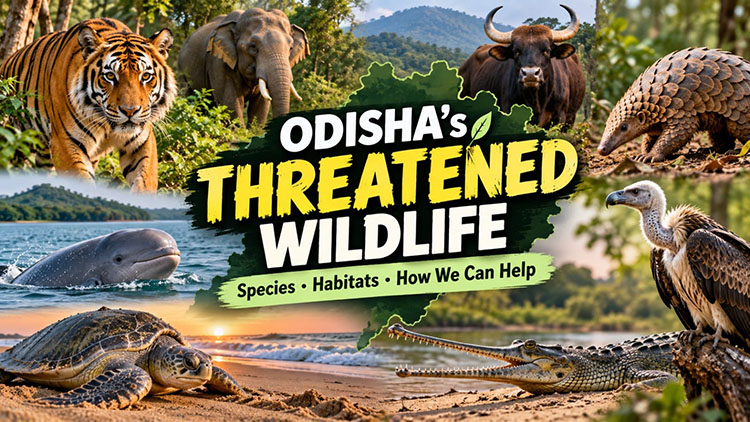
The Bengal tiger, classified as Endangered globally, survives in protected forest landscapes including Similipal and Satkosia. It depends on sufficiently large territories, healthy prey populations and connected habitat. Forest fragmentation, poaching and conflict with people can undermine its recovery.
The Asian elephant, also Endangered, moves across forests and other landscapes in several parts of Odisha. Roads, railways, mining and settlement expansion can interrupt traditional movement routes, increasing the risk of dangerous encounters between elephants and people.
The Indian pangolin is another Endangered species found in suitable forest and scrub habitats. It feeds mainly on ants and termites, but illegal hunting and trafficking have contributed to its decline. The dhole, or Asiatic wild dog, is also Endangered globally. This social carnivore depends on suitable forest habitat and prey, making the protection of large, functioning landscapes important for its survival.
The Indian gaur, commonly called the Indian bison, is classified as Vulnerable globally. It occurs in forest landscapes in Odisha, including Similipal and other protected areas. Although it is a large and powerful herbivore, it still needs sufficient forest cover, natural forage and safe movement between feeding areas.
Other mammals requiring conservation attention include the sloth bear, classified as Vulnerable, which uses forests and scrublands, and the smooth-coated otter, classified as Vulnerable, which depends on rivers, wetlands and other freshwater habitats. Protecting these species requires maintaining both suitable habitat and the food sources they rely on.
Birds facing a changing landscape
Odisha’s wetlands, grasslands and forests support resident and migratory birds. The white-rumped vulture and Indian vulture are Critically Endangered globally. Their populations suffered severe declines associated with veterinary diclofenac, a drug toxic to vultures when they feed on contaminated livestock carcasses. Safe food sources and continued monitoring are important for their recovery.
The green avadavat, a small bird associated with grasslands and open agricultural landscapes, is classified as Vulnerable. Changes in grassland management and the loss of suitable habitat can threaten local populations. The lesser adjutant stork, also Vulnerable, depends on wetlands, marshes and other suitable feeding and nesting areas. Protecting these places benefits many other bird species as well.
Reptiles and marine wildlife
Odisha’s rivers and coastline are important for several threatened reptiles. The gharial, classified as Critically Endangered, depends on suitable river channels, sandbanks and fish populations. Conservation efforts in the Mahanadi’s Satkosia stretch have included gharial releases and monitoring. Its recovery requires more than releasing animals: river habitat, nesting sites and survival after release must also be secured.
The olive ridley sea turtle, classified as Vulnerable globally, is famous for mass nesting at Gahirmatha, Rushikulya and the Devi River mouth. Fishing-net entanglement, coastal disturbance and marine debris can threaten turtles at different stages of their lives.
The Irrawaddy dolphin, classified as Endangered, occurs in Chilika Lagoon, where it depends on suitable aquatic habitat and access to food. Fishing activity, entanglement, boat traffic and other disturbances can affect its survival. Bhitarkanika’s saltwater crocodile, by contrast, is classified as Least Concern globally, but its mangrove and estuarine habitats still need protection. These examples show why conservation must consider both global status and local conditions.
How can we help wildlife recover?
Wildlife conservation begins with protecting the ecosystems animals need to feed, breed and move. Forest protection must include connected habitats, not just isolated patches of trees. Wetlands require clean water and healthy food webs, while sea turtles need protected nesting beaches and safer conditions in coastal waters.
People can contribute by avoiding products made from wildlife, never purchasing wild animals or their body parts, reducing plastic waste and reporting suspected wildlife crime to the appropriate authorities. Visitors should follow protected-area rules, maintain safe distances from animals and avoid disturbing nests or breeding sites.
Communities living near wildlife habitats are essential partners. Early-warning systems for elephant movement, safe livestock management, effective compensation for verified losses and local participation in conservation can reduce conflict. Protecting natural food sources and water, maintaining wildlife corridors and preventing illegal hunting can help populations recover over time.
Captive breeding can support some threatened species, but it is not a universal solution. Successful recovery depends on the species, its biology and the availability of suitable habitat. Releasing animals without addressing the original threats may not lead to a self-sustaining wild population. Conservation programmes therefore need long-term monitoring of survival, reproduction, genetic diversity and habitat quality.
Odisha’s wildlife is not protected by breeding programmes alone. Tigers need functioning forests, gaur need safe feeding grounds, gharials need suitable rivers, vultures need uncontaminated food, and sea turtles need safer nesting beaches and coastal waters. The goal is not simply to increase animal numbers, but to preserve the ecological conditions that allow wildlife to survive and reproduce naturally.
