

Ipsa Tripathy
Bhubaneswar: For decades, Bhubaneswar proudly carried the image of a green and planned city. Known as the “Temple City” and often regarded as one of India’s cleaner urban centres, it offered a quality of life that many rapidly growing cities struggled to maintain. Wide roads, abundant greenery, and relatively lower industrial activity helped keep pollution levels under control.
But that image is slowly changing. The transformation is not dramatic enough to grab national headlines every day. There are no scenes of thick smog swallowing entire skylines as seen in Delhi. Yet residents who have lived in Bhubaneswar for years are increasingly noticing something unsettling.
The air does not feel the same anymore. The winter of last year provided a clear reminder of this reality.
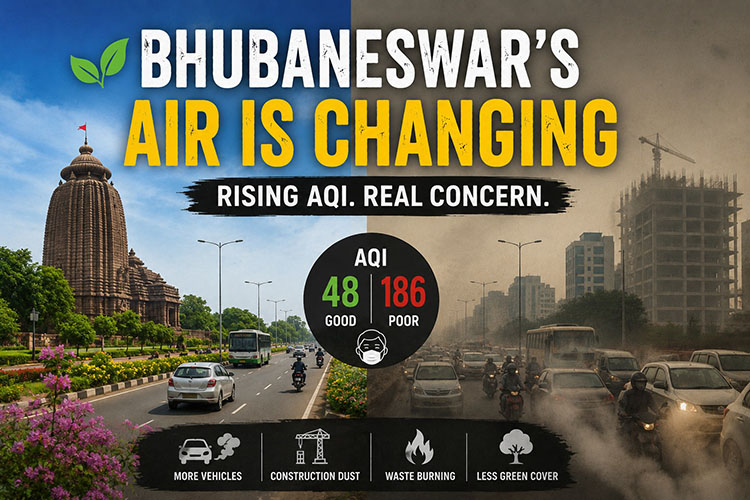
For several days, air quality levels in the city deteriorated significantly, with pollution levels rising to categories that raised concerns among health experts and environmental observers. Morning walks became less pleasant. Visibility dropped in certain areas. People with respiratory conditions reported discomfort.
For a city once known for clean air, it was a warning that should not be ignored.
A City Growing Faster Than Its Environment
Bhubaneswar is among India’s fastest-growing urban centres. New residential projects, flyovers, commercial complexes, educational institutions, and roads continue to reshape the city’s landscape. Development has brought opportunities, improved infrastructure, and economic growth.
But development also has consequences.Thousands of new vehicles enter the roads every year. Construction activity has become a permanent feature across the city. Large stretches of open land are being converted into urban spaces. The result is an increase in dust, emissions, and environmental pressure. Unlike visible problems such as flooding or traffic congestion, air pollution develops gradually.
It does not announce its arrival. It accumulates slowly, year after year, until one day people begin to notice the difference.
Why Winter Makes the Problem Worse
Air pollution is not only about the amount of pollutants released into the atmosphere. Weather conditions also play an important role. During winter, cooler temperatures and lower wind speeds reduce the atmosphere’s ability to disperse pollutants. Dust, vehicle emissions, and other pollutants remain trapped closer to the ground.
This is why many Indian cities experience poorer air quality during the winter months. Bhubaneswar is no exception. While pollution levels may remain moderate during much of the year, winter often reveals the true extent of emissions that accumulate across the city. What residents experienced last winter was not simply a seasonal event. It was a glimpse into what the future could look like if preventive measures are not taken.
The Sources of Pollution
Several factors contribute to declining air quality in Bhubaneswar. Vehicular emissions remain one of the most significant sources. With rising incomes and urban expansion, the number of private vehicles continues to grow rapidly. Construction activities also contribute heavily through dust emissions. Across the city, ongoing infrastructure projects generate large quantities of particulate matter that can remain suspended in the air.
Road dust is another often-overlooked contributor. Heavy traffic and inadequate dust management can significantly affect air quality. In some areas, waste burning and seasonal biomass burning further add to the pollution burden. Individually, these sources may seem manageable. Together, they create a growing environmental challenge.
The Health Impact We Often Ignore
The most dangerous aspect of air pollution is that its effects are rarely immediate. Unlike floods or cyclones, air pollution is a slow-moving threat. People continue with their daily lives while microscopic pollutants enter their lungs every day. Long-term exposure can increase the risk of respiratory diseases, cardiovascular problems, asthma, and other health complications.
Children and elderly citizens are particularly vulnerable. Many residents may not notice the impact today. The concern is what years of exposure could mean for public health in the future.
Is Bhubaneswar Losing Its Green Advantage?
One of Bhubaneswar’s greatest strengths has always been its green cover. Trees not only improve aesthetics but also help absorb pollutants, regulate temperatures, and improve urban air quality. However, rapid urbanisation often places pressure on green spaces. The challenge facing the city is clear: can development continue without sacrificing the environmental advantages that once defined Bhubaneswar? This is not a question for future generations. It is a question for the present.
What Needs to Be Done?
The good news is that Bhubaneswar still has an opportunity to prevent a larger crisis. The city has not yet reached the pollution levels seen in some major metropolitan centres. That makes early action even more important. The government can strengthen air quality monitoring, enforce dust-control measures at construction sites, improve public transportation, promote electric mobility, and increase urban green cover.
Strict action against open waste burning and better road maintenance can also help reduce particulate pollution. At the same time, citizens have a role to play. Greater use of public transport, responsible waste management, and support for green initiatives can contribute to cleaner air.
A Warning Worth Listening To
The story of Bhubaneswar’s air is not yet a story of crisis. But it is certainly a story of warning. Cities rarely become heavily polluted overnight. The decline usually happens gradually, one year at a time, hidden beneath the excitement of development and urban growth. The winter of last year offered a glimpse of what unchecked pollution could mean for the future.
Bhubaneswar still has time to choose a different path. The city can continue to grow. The economy can continue to expand. Infrastructure can continue to improve. But if clean air is not treated as a priority, the city risks losing one of its greatest assets. Because development should improve the quality of life. Not make it harder to breathe.
