

Ipsa Tripathy
Bhubaneswar: A calm lake shimmering under the morning sun is often seen as a symbol of purity and life. But imagine returning to the same lake a few weeks later only to find its clear blue water replaced by a thick green blanket stretching across the surface. At first glance, it may look harmless, even beautiful. Some may mistake it for floating plants or harmless algae. In reality, this sudden transformation is often a warning that the lake is under stress.
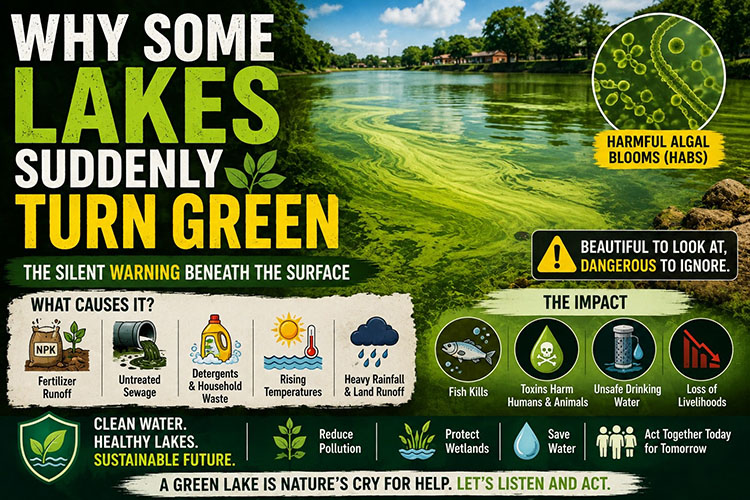
Across the world, lakes, ponds and reservoirs are increasingly turning green due to the rapid growth of microscopic algae and cyanobacteria, commonly known as harmful algal blooms (HABs). These blooms are becoming more frequent because of pollution, climate change and changing land-use patterns. The green colour is not just an environmental concern, it is a signal that the health of the entire aquatic ecosystem may be at risk.
The Science Behind the Green Colour
Lakes naturally contain microscopic algae that play an important role in aquatic ecosystems. Like plants, these organisms use sunlight, water and carbon dioxide to produce food through photosynthesis. Under normal conditions, algae exist in balanced numbers and form the foundation of the aquatic food chain.
Problems begin when algae receive an excessive supply of nutrients, particularly nitrogen and phosphorus. With abundant nutrients, warm temperatures and plenty of sunlight, algae multiply rapidly, forming dense blooms that spread across the water surface. This process is known as eutrophication. Although all algae are not harmful, some cyanobacteria can produce toxins that threaten fish, wildlife, livestock and even human health.
Where Do These Extra Nutrients Come From?
Human activity is the primary driver. Agricultural fields treated with chemical fertilisers often lose nutrients during rainfall. These nutrients are washed into nearby rivers and lakes through surface runoff. Untreated sewage from towns and cities is another major source of nitrogen and phosphorus. Household detergents, food waste and organic matter also contribute to nutrient enrichment.
Industrial wastewater, when inadequately treated, can further degrade water quality. Over time, the lake becomes overloaded with nutrients that were never naturally present in such high quantities. The result is explosive algal growth.
Climate Change Is Making It Worse
Climate change is creating conditions that favour algal blooms. Warmer temperatures increase the growth rate of many algae, particularly cyanobacteria. Longer summers and heatwaves extend the period during which blooms can develop. At the same time, intense rainfall associated with climate change carries larger quantities of fertilisers and sediments into lakes. Ironically, prolonged droughts can also worsen the problem. Lower water levels concentrate nutrients, making blooms even more likely. Scientists have observed that many freshwater ecosystems are now experiencing longer-lasting and more frequent bloom events than in previous decades.
Why Green Lakes Become Dangerous
The greatest danger often appears after the bloom reaches its peak. As algae die, bacteria begin decomposing them. This decomposition consumes large amounts of dissolved oxygen in the water. Fish, crabs and other aquatic organisms depend on oxygen to survive.
When oxygen levels fall too low, a condition known as hypoxia, large numbers of aquatic animals may die. This explains why fish kills are sometimes reported after severe algal blooms. Certain cyanobacteria also release toxins that can affect the liver, nervous system and skin of humans and animals. Drinking contaminated water or even swimming in severely affected lakes may pose health risks. The once-living lake slowly begins losing its ecological balance.
The Ripple Effect on Communities
The consequences extend far beyond the lake itself. Fishing communities may lose their income when fish populations decline. Tourism suffers as foul-smelling, green water discourages visitors.
Water treatment becomes more expensive because additional filtration is needed to remove toxins and organic matter. Farmers using contaminated water for irrigation may also face challenges, particularly if blooms become persistent. In short, a green lake is not merely an environmental issue, it can affect public health, local economies and livelihoods.
Could This Happen in India?
Unfortunately, yes. Several lakes across India have experienced serious algal blooms in recent years, particularly those receiving untreated sewage and nutrient-rich runoff. Urban lakes are especially vulnerable because of rapid population growth and inadequate wastewater management.
Even relatively healthy lakes are becoming increasingly susceptible as temperatures rise and rainfall patterns change. For states like Odisha, which possess numerous lakes, reservoirs and wetlands including the ecologically significant Chilika Lake protecting water quality is becoming increasingly important. Although Chilika’s brackish ecosystem functions differently from freshwater lakes, reducing pollution and nutrient inflow remains essential for maintaining its ecological health.
Can Green Lakes Recover?
The encouraging news is that recovery is possible. The most effective solution is not removing algae after they appear but preventing excessive nutrients from entering lakes in the first place. Improving sewage treatment, reducing fertiliser runoff through sustainable farming practices and restoring wetlands around lakes can significantly reduce nutrient pollution.
Wetlands act as natural filters, trapping sediments and absorbing excess nutrients before they reach open water. Regular monitoring also helps authorities detect blooms early and respond before they become severe. Protecting lakes requires cooperation between governments, scientists, farmers and local communities.
Nature often sends warnings long before ecosystems begin to collapse. A lake turning green is one such warning. It tells us that the delicate balance between water, nutrients and life has been disturbed. If ignored, today’s algal bloom can become tomorrow’s fish kill, drinking water crisis or biodiversity loss. But if we respond by reducing pollution, improving wastewater treatment and protecting wetlands, lakes can recover.
The next time a lake suddenly turns green, it should not simply be seen as a change in colour. It should be recognised for what it truly is a silent cry for help from one of our most valuable freshwater ecosystems. Because healthy lakes are far more than beautiful landscapes. They are lifelines that sustain wildlife, support livelihoods and provide clean water for generations to come.
