

Ipsa Tripathy
Bhubaneswar: For thousands of people across Odisha, stepping outside during the afternoon has become increasingly unbearable. Streets that once remained busy throughout the day now appear deserted under the blazing sun. The harsh “loo” winds, hot, dry gusts that sweep across towns and villages are no longer occasional summer discomforts. They have turned into a serious public health concern affecting workers, students, elderly citizens, and even children confined indoors for most of the day.
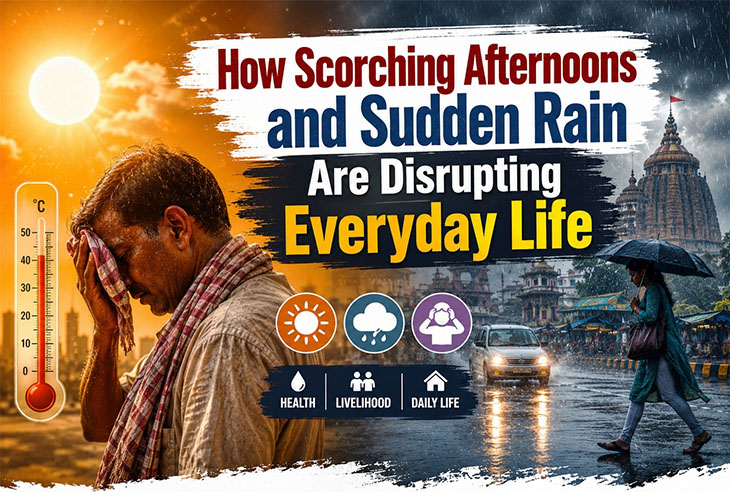
Over the past few years, Odisha has witnessed a sharp rise in prolonged heatwave conditions. Temperatures frequently cross 40 degrees Celsius in several districts, while the humidity often makes the heat feel even more suffocating. But what is making the situation particularly alarming this year is the unpredictability of the weather. Intense sunshine is suddenly interrupted by unexpected rain, thunderstorms, or cloudy conditions, only for the oppressive heat to return within hours. This constant fluctuation is creating physical discomfort, mental stress, and growing uncertainty in daily life.
The afternoons have become especially difficult. By noon, roads radiate heat, walls become too warm to touch, and even staying indoors offers little relief for families without proper ventilation or cooling systems. In many homes, fans simply circulate hot air. People who work outdoors as construction labourers, delivery workers, street vendors, farmers, traffic personnel, and sanitation workers are facing the harshest impact. Continuous exposure to the hot winds can lead to dehydration, dizziness, exhaustion, and in severe cases, heatstroke.
The health implications are becoming impossible to ignore. Hospitals and clinics often report increased cases of dehydration, fever, fatigue, headaches, and respiratory discomfort during heatwave periods. Elderly people and those already suffering from heart disease, asthma, or high blood pressure are especially vulnerable. Children too are finding it difficult to cope. Schools frequently adjust schedules or issue heat-related advisories, while parents worry about exposing their children to extreme temperatures during travel.
What makes the situation even more exhausting is the sudden and unusual rain pattern. Normally, rainfall is expected to provide relief from heat. However, the current weather behaviour is creating a different problem altogether. Short spells of rain increase humidity levels sharply, making the atmosphere sticky and uncomfortable. Instead of cooling the surroundings for long periods, the moisture trapped in the air often intensifies discomfort once the sun returns.
These abrupt weather changes are also affecting immunity and overall health. Many people complain of seasonal illnesses, viral infections, coughs, and body aches triggered by sudden shifts from intense heat to rain and back again. The body struggles to adapt quickly to changing temperatures, especially when the environment swings between dry heat and humid conditions within a single day.
The economic and social impact is equally serious. Outdoor productivity drops sharply during peak afternoon hours. Daily wage workers often lose valuable working time because continuing under extreme conditions becomes dangerous. Small businesses, roadside markets, and local vendors see fewer customers as people avoid stepping outside unless absolutely necessary. Public transport users face exhausting commutes, while electricity demand rises significantly as households depend heavily on coolers, fans, and air conditioners.
Mental health is another overlooked aspect of the heatwave crisis. Continuous exposure to extreme weather can increase irritability, stress, fatigue, and sleep disturbances. Many people report feeling constantly drained and less motivated during long heatwave periods. For individuals living in crowded urban areas with poor airflow and limited green spaces, the psychological burden becomes even heavier.
Climate experts believe that such extreme and unstable weather patterns are closely linked to broader climate change trends. Rising global temperatures, rapid urbanisation, loss of tree cover, and excessive concrete infrastructure are intensifying local heat conditions. Cities absorb and retain more heat, creating what scientists describe as “urban heat islands,” where temperatures remain higher even during nighttime.
While the situation appears worrying, there are several steps individuals and authorities can take to reduce the impact of extreme heatwaves.
At a personal level, people must avoid direct sun exposure during peak afternoon hours whenever possible. Staying hydrated is critical, even for those who may not feel thirsty immediately. Light cotton clothing, oral rehydration drinks, seasonal fruits with high water content, and proper rest can help the body cope better with heat stress. Schools and offices may also consider flexible timings during severe heatwave alerts to reduce unnecessary exposure.
Communities can play an important role by creating shaded public spaces, distributing drinking water in crowded areas, and checking regularly on elderly neighbours or vulnerable individuals living alone. Public awareness campaigns about recognising symptoms of heat exhaustion and heatstroke can save lives during extreme conditions.
However, long-term solutions require stronger institutional action. Urban planning in Odisha must increasingly focus on sustainable cooling measures. More trees, parks, and green corridors can significantly reduce surface temperatures in cities and towns. Roads and buildings designed with heat-resistant materials can help minimise heat absorption. Authorities must also strengthen early warning systems and ensure timely weather advisories reach people clearly and quickly.
Workplace protections for outdoor labourers are equally important. Access to drinking water, shaded rest areas, and regulated work hours during peak heat conditions should become mandatory in high-risk sectors. Investments in public healthcare infrastructure are also necessary to handle the rising number of heat-related illnesses.
The growing heatwave in Odisha is no longer just a seasonal inconvenience. It is becoming a daily struggle that affects health, livelihoods, mobility, productivity, and overall quality of life. The combination of scorching loo winds and sudden unpredictable rain has made weather conditions more exhausting than ever before. As temperatures continue to rise year after year, adapting to this new climate reality is no longer optional. It has become an urgent necessity for individuals, communities, and governments alike.
