

Ipsa Tripathy
Bhubaneswar: There was a time when Indian summers felt predictable. People complained about the heat, carried umbrellas, drank extra water, and somehow managed to move through the season together. The afternoons were harsh, but evenings usually brought relief. Life slowed down for a few hours and then returned to normal.
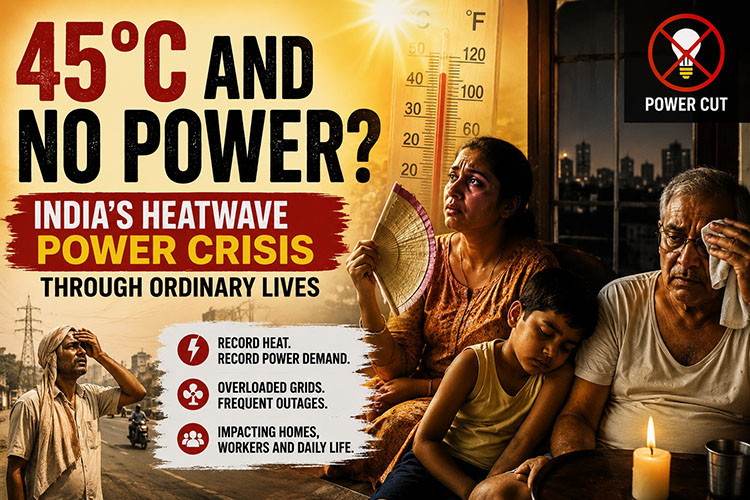
Now, even the nights feel heavy. Across many cities and towns this year, the heat has become difficult to ignore. Temperatures crossing 45°C are no longer shocking headlines. They have started feeling routine. What is more worrying, however, is not just the heat itself, but how deeply it is affecting ordinary people who are simply trying to get through their day. The problem becomes most visible when the electricity goes out. In many households, especially in crowded urban neighborhoods, electricity is the only barrier between discomfort and complete exhaustion. A fan running continuously through the afternoon, a cooler in the corner of a small room, or an air conditioner used for a few hours at night has become less about luxury and more about basic relief. So when power cuts happen during peak heat, homes quickly become unbearable.
In a small apartment with little ventilation, the temperature rises within minutes. Children become restless. Elderly family members struggle with the heat. Students preparing for exams lose focus. People sit silently near windows hoping for some air to enter. Sleep becomes difficult, and without proper rest, the next day begins with the same exhaustion. For families that can afford inverters or generators, the inconvenience lasts briefly. For many others, there is no backup at all. This is the side of the climate crisis that rarely appears in statistics.
For a street vendor standing beside a hot road for ten hours, heat is not an environmental debate. For a delivery worker riding through traffic in the afternoon sun, it is not about global warming reports or scientific projections. It is about physical survival, daily income, and returning home safely. Even those working indoors are feeling the pressure. Electricity bills are rising sharply because fans, coolers, and air conditioners now run for longer hours than before. Middle-class families that once used cooling appliances occasionally are now depending on them almost every day. Many people have quietly started adjusting household expenses just to manage summer electricity costs.
At the same time, India’s power system is struggling to keep pace. As millions of households increase electricity usage together, local transformers become overloaded. Short outages are becoming more common in several regions. During severe heatwaves, demand rises so sharply that even large cities begin to feel the strain. There is an irony in all of this. The more people try to protect themselves from the heat, the more pressure falls on the energy system. What makes the situation more unsettling is the feeling that each summer is becoming harder than the previous one.
People are noticing changes they did not discuss much earlier. Summers seem to arrive sooner. The heat lasts longer into the evening. Water shortages begin earlier in the season. Roads remain warm long after sunset. In many cities, concrete buildings and shrinking green spaces trap heat throughout the day, making urban areas feel even more suffocating at night. Scientists have been warning about these patterns for years, but ordinary people are now experiencing them directly in their daily lives.
And perhaps that is why this issue feels different now.
Climate change is no longer something distant or abstract. It is visible in overheated buses, crowded hospital wards treating dehydration cases, and homes where families wait anxiously for electricity to return during another hot night. What is truly concerning is how quickly society is beginning to accept these conditions as normal. Extreme heat should never feel ordinary. Repeated power cuts during dangerous temperatures should not become something people simply “adjust” to. Yet that adjustment is already happening.
People continue going to work despite exhaustion because they have no choice. Parents continue worrying silently about electricity bills because expenses keep rising. Workers continue standing under direct sunlight because missing a day’s income is not an option. Life moves forward, but with increasing strain. The reality is difficult to ignore now: rising temperatures are no longer only an environmental issue. They are affecting health, sleep, productivity, finances, and the basic quality of life for millions of people.
For many Indians, the fear is no longer about what the future climate might look like decades from now.
It is about whether the next summer will become even harder to endure than this one.
